Names They Should Bring Back

I was visiting Exeter recently and took the opportunity to look around the Cathedral. Plenty caught my eye amongst the ancient splendour. Beautiful flags which were so old they were literally see-through.

exeter cathedral flags

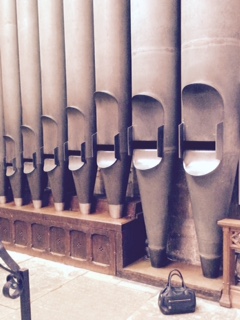
Huge organ pipes (my small handbag is placed so you get the scale).

exeter cathedral organ pipes

A medieval Hobbit-like door with some 21st Century Health and Safety equipment on hand.

exeter cathedral door

Another thing I noticed was a memorial stone for the daughter of Mr and Mrs Hibbert, whom they called “Saccharissa” and who died in 1828. Now there’s a name which should be brought back pronto. It makes me think of sugar. Italian sugar. I bet she was kind and pretty.

exeter cathedral name

In  the 19th century, the most popular given names were Mary and either John or William for girls and boys, respectively. We may think that the more crazy end of the Christian name market comes from the 20th and 21st centuries. Not a bit of it. The ‘heir hunter’ genealogy firm in London, Fraser and Fraser, recently came up with a list of bizarre names from 19th Century birth, death and marriage documents. My favourites are Zebra Lynes – a girl born to James and Mary Lynes in Southampton in 1875; Mineral Waters, born in 1892 to Henry and Emma and (definitely the best) One Too Many Gouldstone, born in 1870 to Robert and Martha of Walthamstow, London, who were clearly wishing for a bit of a rest.

So, eat your heart out Apple and North West, Bluebell Madonna, Bronx Mowgli and Moon Unit. This has been going on for years – there is nothing new under the sun.

green bee for signature copy

Annie Bee x

The Side-Plate Diet: Breakfasts

In previous posts I have talked generally about the Side-Plate Diet and the business of which side plate  to use (size matters) and how many – I am currently on 3 a day but once or twice a week add another (albeit with an apple and a small handful of nuts on it, so still nice and healthy).

So now for the nitty-gritty of what to actually put on the side-plates during the day so that you are optimally healthy but losing weight.

The beauty of this diet is that you are essentially eating perfectly normal food, you are just constraining the amount by imposing strict portion control. Get your 3 (or 4) plates out first thing in the morning and take pictures of each meal as you go along. Remember, there is evidence to show that by keeping a diary of your food intake, you will increase the likelihood of weight loss. The best way I have found is taking snaps on my phone. If you have got a diet-buddy, send them to him or her, or indeed send them to me.

Let’s start with breakfast: Once you begin the Side-Plate Diet, you will definitely be nice and hungry by the time breakfast comes around. The question of whether breakfast is the most important meal of the day now appears to be moot (have a read of this information from the NHS: http://www.nhs.uk/news/2014/08august/pages/breakfast-not%20the-most-important-meal-of-the-day.aspx ) but I LOVE breakfast, so here are half a dozen suggestions for brekkies which fit nicely on a side-plate and should keep you going until lunch.

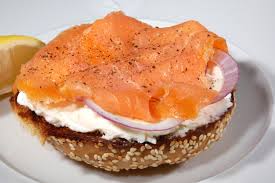
1. Half a bagel with low-fat cream cheese and smoked salmon. This is probably more of a once-a-week treat, or brunch out with friends.

smoked salmon on bagel

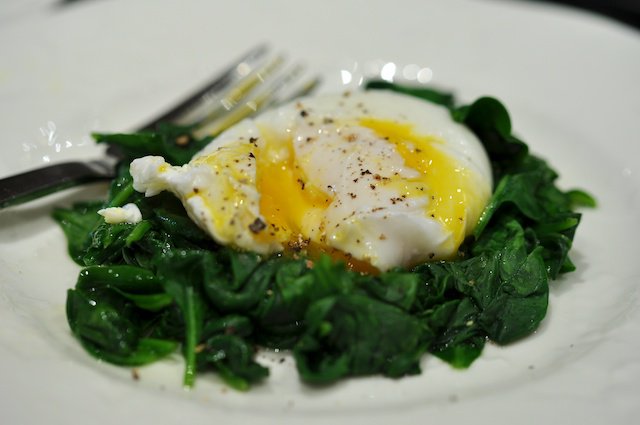
2. One poached egg on a bed of spinach

Paleo-Spinach-and-Poached-Eggs-image

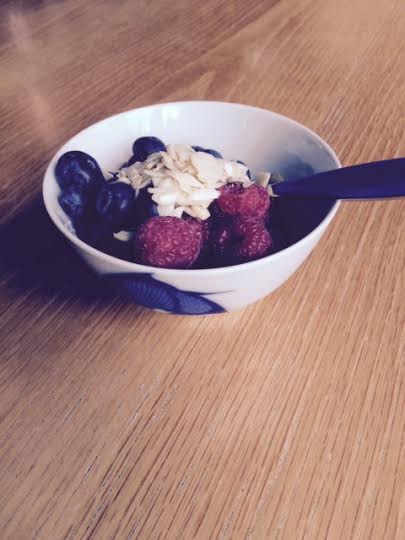
3.My go-to, quick and easy breakfast choice: Bircher Muesli or normal healthy cereal http://www.theguardian.com/lifeandstyle/wordofmouth/2014/oct/23/how-to-make-perfect-bircher-muesli-recipe with honey, berries and seeds or nuts on top. Use a dipping bowl or small teacup for this. I recommend using oats (in my case I am extremely lucky to be a coeliac who can tolerate gluten free oats) as they contain slow release energy. These pictures below show the layers of food I put in my dipping bowl which, by the way, is 4.25 inches across at the top. Almond-milk soaked oats + pomegranate seeds + raspberries + blueberries + topped with flaked almonds.

breakfast 1

breakfast 2

breakfast 3

breakfast 4

breakfast 5

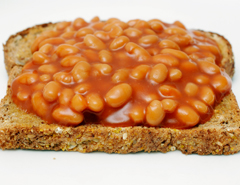
4. One slice of wholemeal toast with enough baked beans to cover. (Don’t overload)

62_beansontoast

5. Low fat Greek Yoghurt (which has twice as much protein as regular yoghurt) topped with berries, a few toasted almonds and some seeds.

greek yoghurt

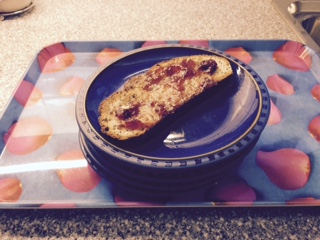
6. One slice of wholemeal toast with peanut butter or jam or honey on.

toast on side-plate

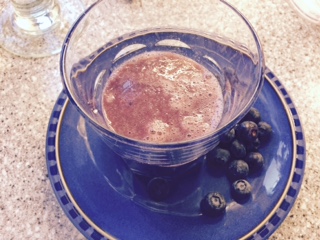
You can see in that photo that I have the plates out ready for the day ahead. I think I can see four. By the way, I very rarely drink juice or smoothies, but if you do want to, on the Side-Plate Diet, make sure it is in a small glass (see below). Even something as healthy as a freshly made fruit or vegetable juice smoothie needs to have portion control imposed on it.

smoothie pic

The thing to remember though is this: whatever you normally have for breakfast, as long as it isn’t a Mars Bar, or a bowl of Ben and Jerry’s, if you put it onto a side-plate or into a dipping bowl, you are most likely cutting down on your calorie intake. You will lose weight on this diet if you stick to this imposed portion control. However, nobody wants to feel faint or weak from lack of food, so you may need to adjust the number of side-plates you use. There are lots of variables: your metabolism, the amount of exercise you take and your age being the three most obvious. I definitely don’t need the amount of food I used to eat in my 30s and 40s. It has taken me a while to accept that, but there we are.

Also, don’t eat between the side-plate meals under any circumstances. Not so much as one grape!

This diet works!

Good luck and watch out for some lunch ideas coming soon.

green bee for signature copy

Annie Bee x

More pics of healthy breakfast ideas here: https://uk.pinterest.com/buzzanniebee/healthy-breakfasts/

Surprising Finds #1 ~ Books In A Phone Box

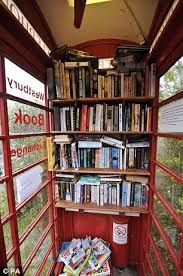
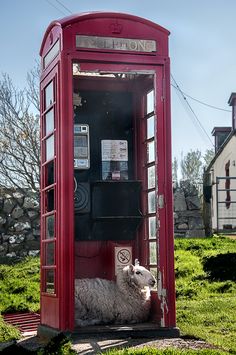
I went for a long walk in the countryside with my BF a few weeks ago and came across this marvellous surprise in a tiny Cornish hamlet – an out-of-use phone box now being used as a book exchange. It was fully stocked and seemed to have a very diverse choice of reading material. Apparently they are popping up all over the place, but I had never seen one before. It made me wonder what other uses you could put old phone boxes to.

kenwyn book exchange cropped

phone box sofa

Libraries are also popping up in pubs in the UK at quite a rate. In Cornwall alone there seem to be at least a dozen of them, partly a result of the County Council’s cuts to its mobile library service. One pub, The Grenville Arms in Nanpean, incorporates a library, sub post office and shop which sells local produce.  What are the benefits? They offer a well needed service for the local community whilst cutting down on food miles; they create full and part-time employment for local people; they sell local produce which in turn helps local suppliers and they promote health and well-being in the area through the venue becoming a community meeting point.

There is a not-for-profit organisation for the UK called Pub Is The Hub http://www.pubisthehub.org.uk/  which works to promote this idea. I love it. What do you think?

post box 1

post box sheep

post boxes abandoned

green bee for signature copy

Annie Bee x

More pictures you might like: https://uk.pinterest.com/buzzanniebee/phone-boxes/

The Joys Of Being A 50+ Woman

When my friends and I turned 40, there was a spate of lovely girlfriend birthday parties and one favoured present was a packet of Tena incontinence pads. How we roared. Not so funny now we have hit 50, is it ladies? Things have started to – I am trying to think of a nice word here – loosen and slacken, droop and fall. Externally and (more alarmingly) internally. Chin hairs sprout overnight; if you are lucky you can plait them, put a scrunchy on them which matches that day’s outfit and go about your business.

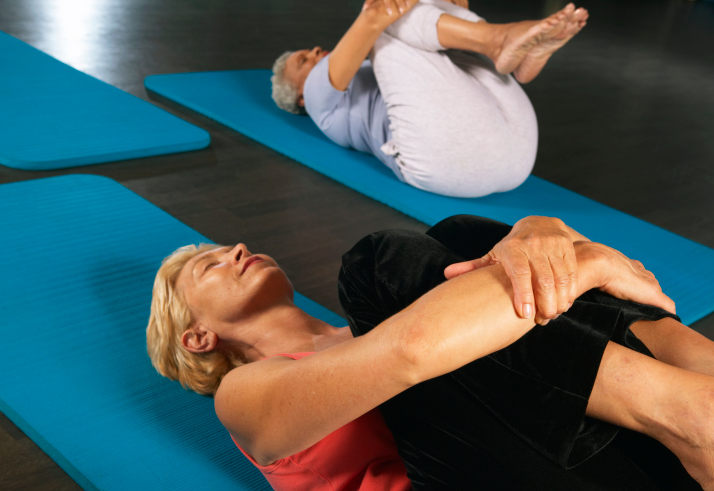
Many of the challenges faced by the over 50s woman are linked to the menopause and the accompanying dwindling amount of oestrogen in your body, but as we are all living longer, we do need to learn to love this post-menopausal life, wrinkles and all. The average age in the UK when menopause hits is 51 and sadly there is very little scientific evidence to support complimentary therapies if you decide, like me, that HRT is not an option. Exercise and relaxation (yoga, mindfulness) are recommended as being helpful though. British women can expect to live more than 30 years post-menopause, so we do need to understand it and get help if we need to.

200380495-001

Two Professors at The Institute of Psychiatry, King’s College London are currently doing research into the effects of the menopause on work performance. Like many women, I don’t work in the traditional office-based, 9 to 5 manner, but I certainly do have a huge amount of sympathy for those who are making critical business decisions, managing the P&L, and being responsible for other people’s careers, if they fall into the category of the 25% of women who have troublesome menopausal symptoms. Poor concentration, tiredness, poor memory and lowered confidence can all impact on your ability to perform in the workplace.

Interestingly attitudes to the menopause, and (surprisingly) symptoms, seem to vary around the world. If you want to read some in-depth info, this is a good source: http://www.menopausemgmt.com/cultural-differences-in-symptoms-and-attitudes-toward-menopause/

So what is the upside for us?

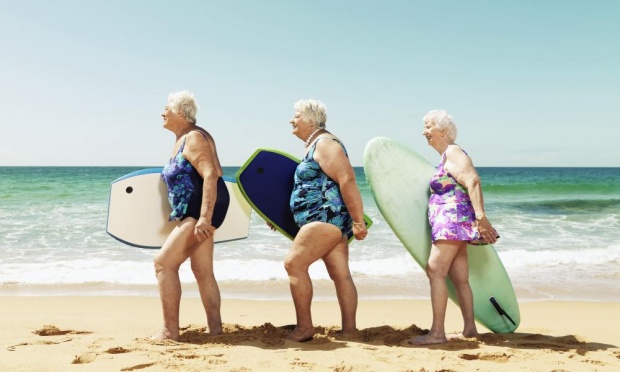
You can reinvent yourself in your 50s – you can wear what you like, be as quirky as you like, and you have probably settled into a very individual style of your own. You may not give a monkeys any more about what people think – you have opinions based on decades of wisdom and experience and you are probably not afraid to share them. Chances are your kids have just about flown the nest. Maybe it is time to take up pottery, change career path, start knitting, write a book, launch a new business, spend more time going to the theatre, take surfing lessons, train for a 5k run or learn how to upholster chairs. I hadn’t realised this, but you can join U3A (University of the Third Age) http://www.u3a.org.uk/ at any time you like.  Benefits galore.

elderly women going surfing in Oz

Thanks for reading and I’d love to hear from you.

green bee for signature copy

Annie Bee x

The Side-Plate Diet: Portion Distortion

In my first two blogs (see the February archive on the right of this post) I was talking in fairly general terms about portion sizes, plate sizes, obesity and the simplicity of my Side-Plate Diet.

In this piece, I want to discuss Portion Distortion. No matter how healthily you might be eating, if you eat too much and take in too much fuel and fail to burn it, you will put on weight.

Over ten years ago the UK charity, The World Cancer Research Fund (WCRF) http://www.wcrf-uk.org/ reported that over the previous 20 years food portions got ever bigger. Burgers were 112%  larger than in 1982, pasta servings 480% larger, and chocolate chip cookies 700% bigger. The UK Government has not updated their information on typical portion sizes consumed in the UK for over 20 years.

Dr Jeffrey Prince of the WCRIF said: “Between 1980 and  2003 portion sizes ballooned, and so did people. These two trends occurred simultaneously. Common sense tells you there must be a connection. Most weight loss success stories centre around reduced portion sizes. It’s a simple fact, if you eat less, you’ll lose excess weight”. Since then, things have probably got even worse regarding serving sizes, but the adage ‘eat less, lose weight’ remains true.

increase-in-portion-sizes

Packaging of our food plays an important role. The bigger the package, the more food you’ll pour out of it. When two groups of people were given 1/2 lb or 1 lb bags of M&Ms to eat while watching TV, those given the 1-pound bag ate nearly twice as much. The more you load onto your plate, the more you will eat. There are many studies to back this up (for more in-depth research take a look here: http://www.ifst.org/knowledge-centre/information-statements/psychology-food-intake-and-portion-control ). The NHS recommends, in their information on dieting, that we should be eating with smaller plates and bowls.

Previous Annie Bee  posts which cover this topic, in case you missed them, are here:

The Side-Plate Diet: The Background

When Is A Side-Plate Not A Side-Plate?

By only eating off side-plates like I do (for me, 3 a day means I am slowly losing the weight I need to without feeling weak and feeble – clearly the number of side plates will change depending on your gender, age, size etc and I am NOT advocating doing this diet if you do not need to lose weight in a sensible manner) this problem with portion distortion is largely solved for you. NB: I use 7 inch side-plates – make sure you get the size right. There are challenges around ensuring you still get enough fruit and veg, and keeping your food intake healthy and balanced but as long as you don’t snack (I literally now don’t so much as pick up an extra cherry tomato while walking past the fruit bowl) this diet works.

Other bits of diet advice which seem to be universal are: Eat slowly. Put your cutlery down between bites. Don’t eat in front of the TV.

Look out very soon for more in-depth information on the Side-Plate Diet  and let me know if you are giving it a go. I would love to receive some photos too.

vintage

There are some more pics you might like here https://uk.pinterest.com/buzzanniebee/portion-distortion/

green bee for signature copy

Annie Bee x

Hello. My Name Is Annie And I Am A Coeliac (or is that Celeriac?)

Several years ago I was chatting to the manager in my local large supermarket about the very emotional issue (if you are a coeliac) of gluten free bread, and he said, “Oh yes, I know it must be terribly hard for you celeriacs”. I didn’t have the heart to correct him as he looked so earnest, but have to say that as the years have gone by, the understanding of coeliac disease (hard enough to spell, let alone live with) and the offending protein, gluten, has improved hugely. Gluten free (gf) foods are now readily available here in the UK and many restaurants have menus which are fully labelled, taking the stress out of eating out. I was out for lunch recently here in Hertfordshire though and the waitress gleefully told me she would bring me the Allergy Information Pack which turned out to be a 100 paged, closely- typed scientific report which I then had to cross-reference against the menu. Jolly helpful you might think, but by the time I had found things I liked the sound of, checked whether the tick meant it was gf or contained gluten, and finally checked if it was on that day’s lunch menu, I had lost my appetite and was stressed by the whole palaver, as was Mr Bee. All coeliacs will know this problem well. Worse though is the waiter who says, “Yes I am sure that will be fine” but comes back 10 minutes later with the type of comment which makes a coeliac shudder: “the risotto contains rice, so you can’t have that”. If that is the level of their knowledge, cast aside your napkin and RUN.

gf ee card

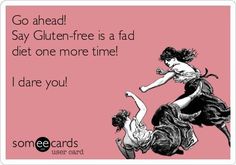
Some very lovely people I know eat a gluten free and/or wheat free diet for health reasons, even though they may not technically have this auto-immune disease (or at least have not been diagnosed). I vividly remember one waitress in a restaurant literally rolling her eyes when I told her I couldn’t have gluten (another picky eater) so I do sometimes feel like wearing a little badge which says ” REAL Coeliac” and I always, without fail now refer to it as “Coeliac Disease” when talking to people in a restaurant, cafe or shop. There does seem to be good evidence now of what is called ‘Non-Coeliac Gluten Sensitivity’ (NCGS) so we RCs (Real Coeliacs) need to embrace our brothers and sisters. The more the merrier.

There are so many lovely blogs, websites and books for coeliacs now. When you are at home, you can eat like a king. Travelling abroad has its challenges but you can print off information about the disease in loads of languages these days which at least cuts down on the chances of mistakes being made.

It is no picnic being coeliac, but there are MUCH worse problems to have.

If you want a good, in-depth article on these matters, try this:  http://www.theguardian.com/lifeandstyle/2015/feb/25/gluten-free-diet-life-saving-fad

Thanks for reading. There are a few more pics here: 

green bee for signature copy

Annie Bee x

It’s Prestigious To Be Busy + Walking

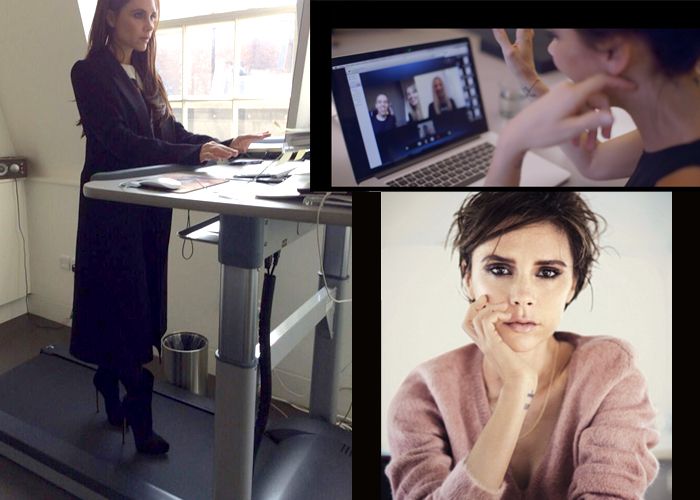
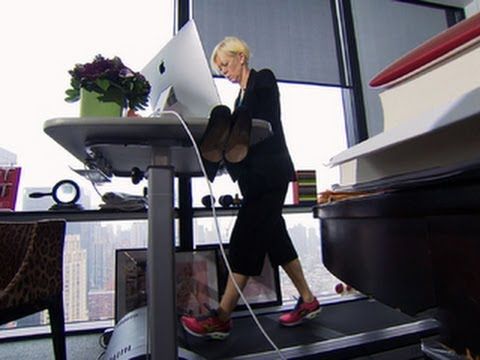
I was listening to Ruby Wax being interviewed on Radio 4 last weekend  – an exhausting woman  (I was driving at the time and almost had to pull over and have a little rest)  – and she said, “It is prestigious to be busy these days” and she did not mean it kindly. So true. If you are not standing up (Sitting Down Is The New Smoking) you risk becoming a social pariah. I hear there are people lap-topping away on a treadmill as I write (attached to a string around their neck, like glasses perhaps?).

What’s it all about?

As I mentioned in a previous post about Calories In, Calories Out, you will know (we all know) that activity is very important to helping and maintaining weight-loss, and combining exercise into your life is the best way of doing this. Every magazine/newspaper  I read tackles the subject ceaselessly  and it is a very big business (in the UK alone the diet business is thought to be worth £2bn). You might be sick to death of hearing about it, but the great news for all of us, but particularly for women over 50, is that walking is fine.This information is from The Guardian :

“Brisk walking reduces the risk of heart disease more effectively than running when the energy expenditure of both activities is balanced out, a study has found.

Researchers compared data from two studies of 33,060 runners and 15,045 walkers. For the same amount of energy used, walkers experienced greater health benefits than runners.

The effects on participants, who were aged 18 to 80, were observed over a period of six years.

Running reduced the risk of heart disease by 4.5% while walking reduced it by 9.3%.

Calorie for calorie, walking also had a stronger impact on heart disease risk factors. The risk of first-time high blood pressure was reduced by 4.2% by running and 7.2% by walking.

First-time high cholesterol risk was lowered by 4.3% by running and 7% by walking.

The risk of first-time diabetes was reduced by about 12% by both walking and running.

“Walking and running provide an ideal test of the health benefits of moderate-intensity walking and vigorous-intensity running because they involve the same muscle groups and the same activities performed at different intensities,” said study leader Dr Paul Williams, from the Lawrence Berkeley National Laboratory in California.

“The more the runners ran, and the walkers walked, the better off they were in health benefits. If the amount of energy expended was the same between the two groups, then the health benefits were comparable.

“People are always looking for an excuse not to exercise but now they have a straightforward choice to run or to walk and invest in their future health.”

The research is reported in the American Heart Association journal Arteriosclerosis, Thrombosis and Vascular Biology”. 

This is fabulous news for people like me for whom The “R” Word (as my beautiful friend Christine used to call it) does not tend to fit into their daily list of exercise. But we can all have a brisk walk and indeed very recent research from the University of Cambridge suggests that just 20 minutes a day has a big impact http://www.theguardian.com/lifeandstyle/2015/jan/14/scientists-recommend-20-minute-daily-walk-premature-death

Hooray! Cancel my order for that treadmill for the study; no need to pretend that I can see a computer screen while on the move. And have a good look at Ms Beckham’s shoes below. Someone needs to have a word. It will end in tears.

treadmill work 2    treadmill pic

And finally, I can highly recommend the Nike+Running App (ignore The “R” Word) https://itunes.apple.com/gb/app/nike-gps/id387771637?mt=8.  I use it mainly to check how far I have gone and it keeps a record of the walks which I find very motivating.
Happy walking!

green bee for signature copy

Annie Bee x

https://uk.pinterest.com/buzzanniebee/exercise-work/

The Menopause Can Last HOW LONG?

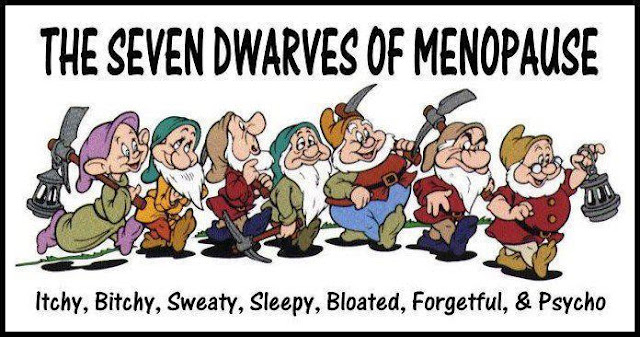
The menopause is the gift that just keeps on giving. I do remember vast swathes of the 1970’s taken up by my Mum talking about how awful it was, but I was too young and selfish to care. How that smile has been wiped off my face. A friend of mine recently announced, at an otherwise very nice lunch, that her menopause had so far lasted 7 years. You could have stabbed the rest of us with our dinner forks and put us out of our misery right there. Seven years? How is that possible?

When mine first started I admit to finding the hot flushes quite interesting – how is it that my body is managing to do this spectacularly weird thing? By the way, on this side of the pond, we refer to them (hot flushes) in that slightly quiet, polite British manner; in the US they call them “hot flashes” which seems about right if, like me, when you are in the throes of one, you literally strip off layers of clothing without a thought for your whereabouts (the fruit and veg aisle at the supermarket, or – worse – driving along a motorway at speed). It didn’t take long for that initial wonderment to wear off. Here I am several years later, still lurching from interrupted sleep to stripping off in front of astonished strangers to asking the GP whether I have early onset dementia. My metabolism is slower than Titanic swerving round the iceberg, and I put on weight just at the mention of the word ‘menu’.

The list of symptoms women can suffer from is long and does not make happy reading. This is from the NHS website:

  • hot flushes and night sweats
  • loss of libido (sex drive)
  • vaginal dryness and pain, itching or discomfort during sex
  • palpitations (heartbeats that suddenly become more noticeable)
  • headaches
  • mood changes, such as depression, anxiety or tiredness
  • sleeping problems, such as insomnia
  • urinary tract infections (UTIs)

Is that all? Any more you want to throw at us?

I can have no symptoms at all for several months, and I start to congratulate myself on getting to the end of the menopause in such a stylish and graceful manner. Next minute it’s back with a vengeance and I am shattered from lack of sleep and googling whether taking soy supplements could possibly help.

Most of the treatments on offer fall into two camps: firstly, taking medicines (one of which is  HRT) and secondly, ‘self-help’ which is essentially eating healthily and exercising. The third option is Suck It Up. I favour this but also occasionally enjoy a good moan about yet another reason why being a woman can be rather difficult. Is there an upside? Let me think …………

No

green bee for signature copy

Annie Bee x

https://uk.pinterest.com/buzzanniebee/menopause/

seven-dwarves-menopause-funny-cartoon

Patricia Arquette – A True Romance

If you have never seen the 1993 film, “True Romance”  you are missing out. Patricia Arquette (in the news this week for winning Best Supporting Actress Oscar for her turn in “Boyhood”) plays Alabama Whitman, the archetypal hooker-with-a-heart. She wears great outfits, amazing sunnies, and looks good enough to eat. This week, I have loved seeing pics of Ms A at the Oscars, with her “Yes, I am Over 50” and “No, I Have Not Had Any Work Done” (take note, Melanie Griffith) vibe,  her slightly wonky teeth and her luscious white arms. Utterly beautiful, but somehow more normal looking than all the other beauties of the film world.

Alabama - True Romance patricia_arquette_0scars

I wanted to call one of my Baby Bees Alabama but was scuppered when I produced a boy. However, one of my chickens is called Alabama: a blonde, slightly plump, eccentric hen. Even with her wings clipped she manages to climb up onto the fence where she does some alarming, but funny cartoonish moves before I tempt her down with dried worms.

It is nice to see Ms Arquette looking even slightly like the rest of us middle-aged women rather than the stick-thin, cosmetically enhanced actresses strutting the red carpet. Have a listen to her Oscar acceptance speech too and catch Meryl Streep showing her support. Slightly bonkers, but good fun.

green bee for signature copy

Annie Bee x

https://uk.pinterest.com/buzzanniebee/women-over-50/

When Is A Side-Plate Not A Side-Plate?

According to Wiki, a side-plate (sometimes also called an appetiser plate, a dessert plate, a breakfast plate or a salad plate) can vary from 4 to 9 inches (10-22cm) across. Clearly if you are going to have a go at the Side-Plate Diet, size is a crucial point, although hopefully any side-plate is smaller than a normal dinner plate which you would otherwise be eating off. I have pretty much always eaten lunch and dinner on a normal dinner plate, on top of which (being a fairly greedy kind of gal) giving myself as much food as my husband (Mr Bee, who runs 6 miles a day and works full-time). The psychology of this fascinates me: I am pretty sure I felt that I ‘deserved’ as much food as he was getting. But we all know that women need fewer calories than men, on top of which there is the ever important aspect of Calories Out which I touched on in the first blog. More of that later.

The beauty of the Side-Plate Diet is this: you used to eat amount every day off bigger plates. By eating off a small plate, you are cutting down on portion size and, so long as you are not putting a large slice of coffee and walnut cake onto that side-plate, this will definitely mean fewer Calories In. Bingo. Weight loss.

Back to plates: according to Google, in the 1960s, dinner plates were roughly 9 inches in diameter. In the 1980s, they grew to around 10 inches. By the year 2000, the average dinner plate was 11 inches in diameter, and now, it’s not unusual to find dishes that are 12 inches or larger. I imagine in the 1950’s these would have been called a platter, and yet, here we are putting our dinners on them. No wonder we are piling on the pounds. I was out with a colleague a few weeks ago who, on seeing my medium-sized coffee (not the large, the size of which resembles a soup bowl) said we are now dealing with American sizes, even for coffee. She is right. A large Coke, at the cinema for example, is enormous – way too much surely.

By changing the portion size you change the amount you consume. No counting, no faddy protein-only, fruit -only, fat-free, juice -only; no meal replacements, no weighing your food, no supplements. Many of these diets (and I have tried a few) are unsustainable; you will get an initial weight loss but where are you 4 months down the line or, more to the point, 12? They are hard to make work in the office, or eating out. With the Side-Plate Diet you eat  exactly what you would have been eating, but on a small (I would suggest 7 inch) side-plate.

In my house we have blue Denby crockery (it is sturdy, practical and virtually indestructible) and it has done a very fine job for us for the last 15 years, but I like the idea of eating off pretty, maybe vintage, (maybe very modern  – depending on my mood) side plates. You do need to be careful of the size though. I looked at some from John Lewis, but when I read the dimensions closely, although called a side-plate, they were much bigger than 7 inches across.

What about breakfast I hear you say? What about soup? I use little dipping bowls.  original_set-of-four-japanese-dipping-bowls6110184745_54d485544a_z

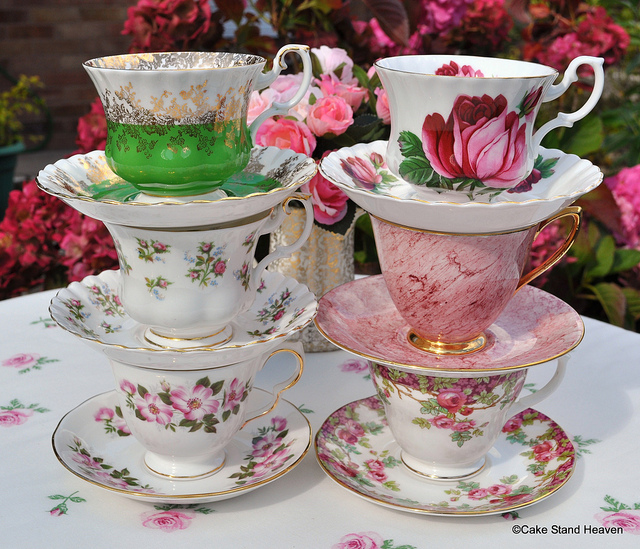
  Alternatively you could use a vintage tea-cup. Just don’t use a normal sized bowl. Remember: portion control. The other fascinating benefit I have found is that by putting these plates and bowls out first thing in the morning, psychologically I know where I stand. It is those plates, no others. Nothing in between. I do not spend my time thinking about food, as I have parameters in which to stay – those plates. It works for me; let me know if you try it and how you get on and do send in your pics. 

Thanks for reading. Let me know how you get on.

green bee for signature copy

ANNIE BEE x

https://uk.pinterest.com/buzzanniebee/side-plates/