Sugar? Carbs? Inactivity? What Is Causing The Obesity Crisis?

Everywhere you look these days, there is a vast amount of information on obesity and weight loss. Most of it makes very scary reading.

A few days ago I was listening to the UK’s leading expert on obesity, Susan Jebb OBE, on Radio 4’s The Life Scientific. She is a nutrition scientist, and the Professor of Diet and Population Health at the Nuffield Department of Primary Care Health Sciences at the University of Oxford; she is also the UK Government’s advisor on obesity in the United Kingdom. One of the headline things I learnt from listening to the interview, is that her many years of research on human metabolism has proved without a doubt that you “cannot get fat without eating too much”. Metabolism is a bit of a red herring in her view and energy intake is KEY: she said that ultimately, obesity is about food intake. Other factors (physical exercise, metabolism etc) play a relatively small role. She did make the very encouraging point though, that a fairly small weight loss  (she gave an example of losing 4kgs which is less than a stone) significantly lowers the risk of diabetes in those predisposed to the disease.
Prof Susan Jebb

Professor Susan Jebb

Obesity and being overweight affects all the organs in the body detrimentally (as well as joints) and is undoubtedly the biggest health threat to the nation.  Another frightening statistic I heard this week was that £1 in every £5 spent by the NHS is as a result of people’s poor lifestyle choices – over-eating, smoking, too much alcohol, drug-taking and inactivity.

One of Prof Jebb’s pieces of research which particularly interests me (in relation to The Side Plate Diet) is entitled, Is plate clearing a risk factor for obesity? A cross-sectional study of self-reported data in US adults. The conclusion was that

….. the tendency to clear one’s plate when eating is associated with increased body weight and may constitute a risk factor for weight gain.

You can read it in full here: http://www.phc.ox.ac.uk/publications/502174

I was on a bit of a research roll at this point, so I also watched the US documentary film, “Fed Up”, about the US food industry. One of the many ideas the film posited was the view that you cannot exercise your way out of being overweight. Physical exercise of course has benefits to your overall health but weight is mainly about the types of food we are eating.The film was jam-packed full of deeply worrying statistics (the growth of Type 2 Diabetes in pre-teens in the US being one) but the main thrust was the very great danger of eating too much sugar, and to some extent, sugar substitutes which have the effect of making you crave more sugary foods. (Note to self: Diet Coke may not be as harmless as it looks).

Sugar , according to the film, is the new tobacco.

Fed Up movie

Today, the following research has made the news, via the British Journal of Sports Medicine

Excess sugar and carbs, not physical inactivity, are behind the surge in obesity.

It’s time to bust the myth that anyone—and that includes athletes—can outrun a bad diet.

Regular exercise is key to staving off serious disease, such as diabetes, heart disease, and dementia, write the authors, but our calorie laden diets now generate more ill-health than physical inactivity, alcohol, and smoking combined. Read more here:

http://press.psprings.co.uk/bjsm/april/bjsm094911.pdf

If you still have a sense of humour after reading that round-up, have a look at Homer Simpson main-lining sugar:  https://www.youtube.com/watch?v=UzhIagCwUUc

Homer Simpson

Happy eating!

Annie Bee x
Annie Bee signature

To Weigh Or Not To Weigh?

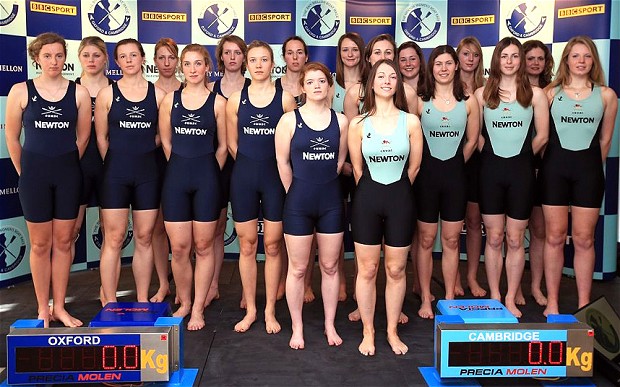
I was listening last week to Clare Balding on R4’s Woman’s Hour chatting about the Oxford and Cambridge Women’s Boat Race. This year it took place on the Thames for the first time ever, and occurred on the same day (Saturday 11th April) as the men’s.  What interested me was that Clare Balding had been along to the weigh-in and was pointing out that while the rowers are all quite small women, they do weigh a fair amount. They are small, lean and full of muscle.

Ox and Camb weigh in

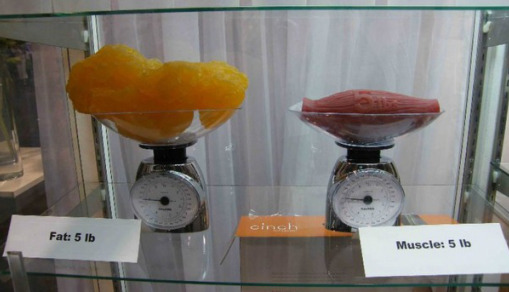
This reminded me of a diet and fitness statement one often hears bandied about: a pound of muscle weighs more than a pound of fat. Well, no. They weigh the same. But the point (which is correct) is that muscle is about 18% more dense than fat and one pound of muscle occupies less space (volume) than one pound of fat.

These pictures illustrate the point.

Muscle V Fat

same weight pic

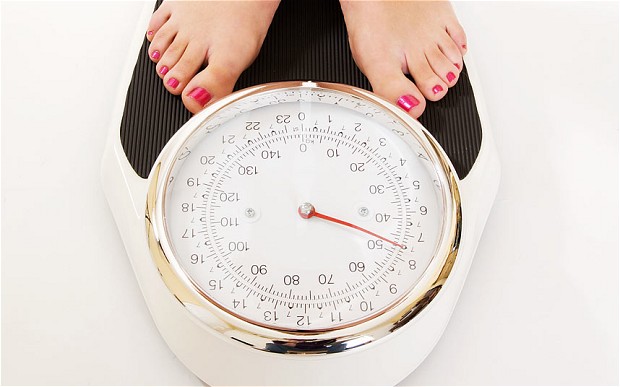
Some people weigh themselves every day, and there is research to show that they do in fact lose the most weight. The research was published in 2014 in the online publication PLOS One (you can access it here http://journals.plos.org/plosone/article?id=10.1371/journal.pone.0113164). Although a relatively small number of people took part (40) there are two or three other studies which show much the same thing.

I NEVER weigh myself. I did get super slim aged about 20 and enjoyed jumping on scales as often as possible, but the more I weigh, the less happy I am to know the truth. When I am forced onto the scales (perhaps at the hospital or by the GP), thankfully very rarely, I look off into the middle distance with a thoughtful, intelligent look in my eye and pray I am not going to get a lecture from the health professional. Often it is in kgs anyway, which is complete gobbledy-gook to me.

scales

I have lost weight recently (see posts on the Side Plate Diet) but am still going nowhere near the scales. For me it is all about how I feel, how I look, and how my clothes are fitting. Also how much muscle I have – the aim is to be lean and fit. Bring it on.

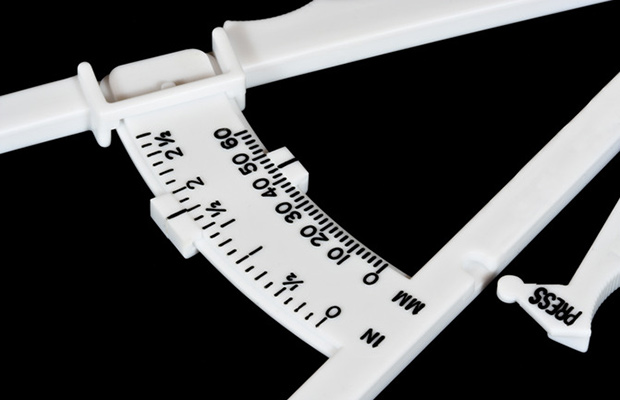
Let me know if you weigh yourself, how often, and whether it is motivating – does it make or break your day? Do you calculate your BMI? Or do you have your body fat percentage measured?  I am not sure I am brave enough to face those body fat calipers just yet, but you never know.

calipers

Annie Bee x
Annie Bee signature

Habits: Hard To Form? Hard To Break? ~ The Impact On Dieting

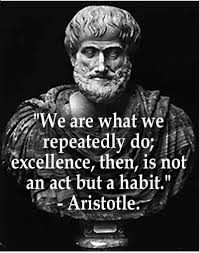
Parents try to instil habits in the tiniest of babies – we bath a newborn at bedtime partly in the hope that it becomes a cue for a good night’s sleep and, later, a habit. Many habits start in early childhood: cleaning your teeth, eating nicely at the table, saying “please” and “thank you”. Those are the good ones. Bad ones – biting your nails for example, a habit I eventually conquered at the ripe old age of 31 – also often start in childhood. Once they are entrenched, new behaviours are terribly difficult to adopt. This makes the whole challenge of dieting both interesting and hugely difficult. Once the bad habits become ingrained into your subconscious, they become ‘learnt’ behaviours and are really tricky to quash.

Aristotle Quote

Some years ago some self-help bods started bandying about the phrase that it took 21 days to form (or indeed break) a habit. Research in 2009 at University College London, however, (‘Intervention Based on the Principles of Habit Formation’ published in the European Journal of Social Psychology) showed that actually it takes an average 66 days for people to perform an initially new behaviour.

Habits are behaviours which are performed automatically because they have been performed frequently in the past. This repetition creates a mental association between the situation (cue) and action (behaviour) which means that when the cue is encountered the behaviour is performed automatically. Automaticity has a number of components, one of which is lack of thought.

They suggested that because bad habits are very difficult to break, one helpful way of conquering this is to take control of your environment so you don’t encounter the cue which acts as a trigger. The research also highlighted that while being wildly inconsistent meant no change to habits, the odd inconsistency was not the end of the world. So we need commitment, but not necessarily a 100% track record. Many women on diets think all is lost if they have a bad day. We need to change that mindset and keep looking forward.

habits

There is undoubtedly truth in the argument that most diets fail and if we want to lose weight, eat healthier and feel leaner and fitter, we need to make a lifestyle choice, not reach for a short-term solution.

I firmly believe that much of this can be answered by strict portion control. In his book “Mindless Eating”, Brian Wansink argues that just an extra 10 calories a day will make you gain a pound in one year. So there appears to be a small margin of error, but this should give us all hope. If you missed my info on Portion Distortion, please have a read: http://wp.me/p5MNeq-2r

Lifestyle change and a long-term outlook then is the answer: breaking bad habits, making new ones and sticking with them once and for all. Diets which work over a long period of time and which become a way of life are ones which suit the dieter and which don’t require too much aggravation and thought. For me, the Side Plate Diet is a winner (see http://wp.me/p5MNeq-2). I eat what I want and enjoy my food, but I simply restrict the amount. Let me know if you are giving it a try.

What experience have you had with habit-breaking and habit-forming? How has it impacted on your diet? Please feel free to comment – I would love to hear from you.

Change ahead

Annie Bee x

Annie Bee signature

Surprising Finds #3 ~ Ash In My Breakfast

I realise just how far behind the curve I am on much life has to offer (who knew Kings Cross in London was now a destination as opposed to somewhere any sensible person would want to get out of as fast as possible? Everyone, it seems, except me).http://www.kingscross.co.uk/

Likewise the spiralizer. My BF recommended it to me and I am a late adopter, but big fan (thanks Hemsley + Hemsley sisters; love the spiralizer and am madly in love with you too with your super healthy bodies, yoga toned limbs and pretty clothes http://www.hemsleyandhemsley.com/recipes/spiralizer/). Apart from finding it slightly difficult to wash after use, this little (relatively inexpensive) gadget is great fun, and I am loving eating ‘courgetti’ (and saying the word as often as possible) with as many meals as is humanly possible.

My latest Surprising Find is Ash in my food. I did have visions of this being actual ash from the bottom of the fireplace (wouldn’t it be cool if this was a new superfood?) but a little bit of research shows I am wrong. It is prevalent in pet food (not so far making me feel more at ease – you?) and essentially refers to the mineral content. Here is a description from a website helpfully entitled All About Dog Food.

‘Ash’ is one of the most commonly misunderstood terms in pet food. Contrary to the images it conjures, ash is simply a measure of the mineral content of a food. When calculating the food’s calorific content, it is incinerated and the energy released is measured. All of the carbohydrate, fat and protein burn off leaving only the minerals. This is known as the ash content.

Ash in food

More helpful if you are a human being, and taken from Livestrong.com: Ash refers to any inorganic material, such as minerals, present in food. It’s called ash because it’s residue that remains after heating removes water and organic material such as fat and protein. Food scientists “ash” foods so that they can examine this leftover material to better determine a food’s content.

So there we are. To ash is a verb. I enter the weekend in the spirit of adventure and education. Life is full of surprises.

Annie Bee x

Annie Bee signature

Other Surprising Finds here http://wp.me/p5MNeq-4k

    http://wp.me/p5MNeq-1G

Is the Over 50s Woman Invisible?

I was out walking one morning this week and I passed a series of small groups of young women (in their 30s I guess) running the same route. Some of them acknowledged me, but many didn’t. Why should they? They don’t know me, I was looking pretty uninteresting (bedraggled some might say), there was no reason to chat (although a Hello is always nice). It struck me that maybe I have become invisible. To begin with I was appalled at this notion, but over the past few days I have come to realise that maybe it is a relief. It got me thinking once again about the whole ageing conundrum.

I don’t think there is a fear of ageing per se, I think we are scared of bad health as we age, and then the sure-fire death which awaits us all.

“I am not afraid of death, I just don’t want to be there when it happens” ~ Woody Allen

The ageing process is unstoppable. Trying to slow it down accounts for a very lucrative market though: all told it is worth an estimated £180 billion globally this year. That is a lot of creams, procedures, supplements and corsetry. Does any of it work? Well not if my neck is anything to go by. Much of the wording around these products is noticebaly negative: ‘anti-ageing’, ‘skin corrector’ and ‘time delay’ all found in the first 20 pages of a magazine I have to hand, all appealing to our deep-seated insecurities. Well, you can run ladies, but you cannot hide. Ageing is here to stay.

Nora Ephron, in her autobiographical book of short essays, I Feel Bad About My Neck, wrote

Oh the necks. There are chicken necks. There are turkey-gobbler necks. There are elephant necks. There are necks with wattles and necks with creases that are on the verge of becoming wattles. There are scrawny necks and fat necks, loose necks, crêpey necks, banded necks, wrinkled necks, stringy necks, flabby necks, mottled necks…..You have to cut open a redwood tree to see how old it is, but you wouldn’t have to if you had a neck.

If you are in your 50s, 60s, 70s, 80s or beyond and are as fit as a flea, your mindset won’t be in a negative loop about poor health and death. Or I hope it isn’t. But sadly there is a tendency that we start to hear bad news about friends in our and their sixth decades; people we know have heart attacks, strokes and get the news they have cancer. It can be a gloomy old time.

On the other hand, I would argue it is not all bad by any stretch of the imagination. The women I know in their 50s are more self-aware than ever before. We are savvy, accepting, stylish and have adjusted to life’s limitations and are ready to enter the FAB (fifties and beyond) era with grace and well-positioned scarves to hide the wattle. There are plenty of challenges (elderly parents, teenage children, an empty nest, menopause, divorce, health issues – take your pick) but I know I am much more capable in my 50s of dealing with these than I was in previous decades. No sensible shoes just yet then.

“It’s sad to grow old, but nice to ripen” ~ Brigitte Bardot

There is certainly truth in the adage that we are as old as we feel. Ageing is a process whereby at various stages we want it to go very fast  – small children want to be older so they can stay up later; teenagers want to be older so they can go to the pub with friends or learn to drive a car; in your twenties you perhaps want to be older in order to increase your earning power, or fulfil your career ambitions. Then later on we want to slow it down or halt it all together – neither is possible of course. There are limitations imposed right through the various decades, but it is surely about accepting them and embracing the constant adjustments we all end up making throughout our lives which will give us the greatest happiness.

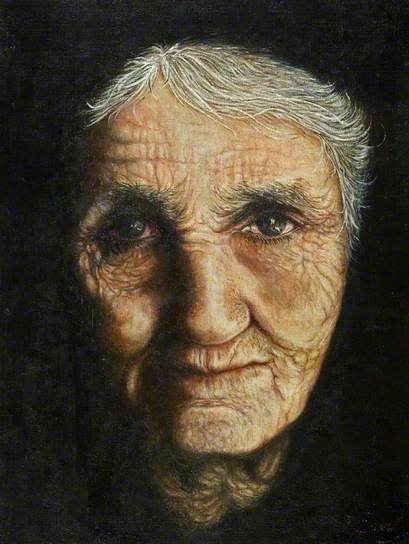
Portrait of an Old Woman by Graham Brindley

Portrait of an Old Woman by Graham Brindley

There are a few blogs I like which show that style is still available to the older woman and that it is worthwhile not giving in just yet:

 http://thatsnotmyage.blogspot.co.uk/

http://agirlsguidetoturning50.blogspot.co.uk/

http://www.notdressedaslamb.com/

So no, we are not invisible. Is acceptance of our age and all it brings the answer? Or should we fight against it?

I am not sure. What do you think?

Breid Morris

Annie Bee x
green bee for signature copy

The Nightmare Cycle of Diet Loss and Regain

Hello again

Put your hand up if you have been on a successful diet and NOT put at least some of the weight back on? Put your hand up if you put it all back on and then some. Are you confused about the very latest thing we are all supposed to be giving up? (Sugar seems to be the most recent baddy, but it is sometimes hard to keep up). Studies show that between 50% and 80% of dieters will put all their lost weight back on and some may well find they are heavier than they were when they first started the diet. How incredibly depressing.

In April 2007, UCLA research in American Psychologist, (the journal of the American Psychological Association) concluded that, “you can initially lose 5 to 10 percent of your weight on any number of diets, but then the weight comes back”.

Traci Mann, UCLA Associate Professor of Psychology and lead author of the study, conducted the most comprehensive and rigorous analysis of diet studies by analysing 31 long-term pieces of research.

“What happens to people on diets in the long run?” Mann asked. “Would they have been better off to not go on a diet at all? We decided to dig up and analyse every study that followed people on diets for two to five years. We concluded most of them would have been better off not going on the diet at all. Their weight would be pretty much the same, and their bodies would not suffer the wear and tear from losing weight and gaining it all back.”

“We found that the majority of people regained all the weight, plus more. Sustained weight loss was found only in a small minority of participants, while complete weight regain was found in the majority. Diets do not lead to sustained weight loss or health benefits for the majority of people.”

Traci Mann

So where does that leave us? Depressed? Unmotivated? Confused? Turning to the nearest donut?

diet pic 2

Diets are a very personal choice – there is probably one to suit everybody’s preferences and lifestyles. For some people, five small meals per day works best; the 5:2 diet (fasting for 2 days of every 7) suits others.  Some enjoy counting calories, others hate it. What seems indisputable is we have to conquer how to make them work in the long run. Many dieters relax after initial weight loss and then the diet slips. Or results are too slow and people become unmotivated.

diet pic 3

We all feel better at an optimum weight so we need to remind ourselves of that: it is easier to move around, easier to run for the bus, our joints don’t suffer, we feel more attractive and (perhaps counter-intuitively) we seem to have more energy. So where do we find this extra motivation? Sadly I don’t have the magic answer – I wish I did.

There is a book called ‘Mindless Eating’ by Brian Wansink which has some interesting information on the psychology of overeating and how we make decisions about the food we eat. He has done some research into the correlation between the size of bowl/plate and the amount of food people subsequently help themselves to. If you have read my previous blogs on the Side Plate Diet you will know that I am a convert to eating off three (occasionally four) 7 inch plates a day. It works for me, but I realise it won’t suit everyone.

If you missed the pieces, use these links below and I would love to hear from you.

https://buzzanniebee.wordpress.com/2015/02/23/the-side-plate-diet-the-background/

https://buzzanniebee.wordpress.com/2015/02/24/when-is-a-side-plate-not-a-side-plate/

https://buzzanniebee.wordpress.com/2015/03/02/the-side-plate-diet-portion-distortion/

https://buzzanniebee.wordpress.com/2015/03/08/the-side-plate-diet-breakfasts/

diet pic

Annie Bee x

green bee for signature copy

The Side-Plate Diet: Breakfasts

In previous posts I have talked generally about the Side-Plate Diet and the business of which side plate  to use (size matters) and how many – I am currently on 3 a day but once or twice a week add another (albeit with an apple and a small handful of nuts on it, so still nice and healthy).

So now for the nitty-gritty of what to actually put on the side-plates during the day so that you are optimally healthy but losing weight.

The beauty of this diet is that you are essentially eating perfectly normal food, you are just constraining the amount by imposing strict portion control. Get your 3 (or 4) plates out first thing in the morning and take pictures of each meal as you go along. Remember, there is evidence to show that by keeping a diary of your food intake, you will increase the likelihood of weight loss. The best way I have found is taking snaps on my phone. If you have got a diet-buddy, send them to him or her, or indeed send them to me.

Let’s start with breakfast: Once you begin the Side-Plate Diet, you will definitely be nice and hungry by the time breakfast comes around. The question of whether breakfast is the most important meal of the day now appears to be moot (have a read of this information from the NHS: http://www.nhs.uk/news/2014/08august/pages/breakfast-not%20the-most-important-meal-of-the-day.aspx ) but I LOVE breakfast, so here are half a dozen suggestions for brekkies which fit nicely on a side-plate and should keep you going until lunch.

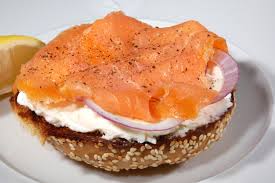
1. Half a bagel with low-fat cream cheese and smoked salmon. This is probably more of a once-a-week treat, or brunch out with friends.

smoked salmon on bagel

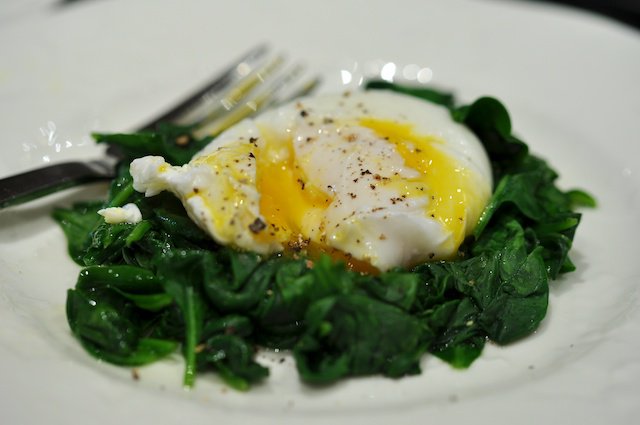
2. One poached egg on a bed of spinach

Paleo-Spinach-and-Poached-Eggs-image

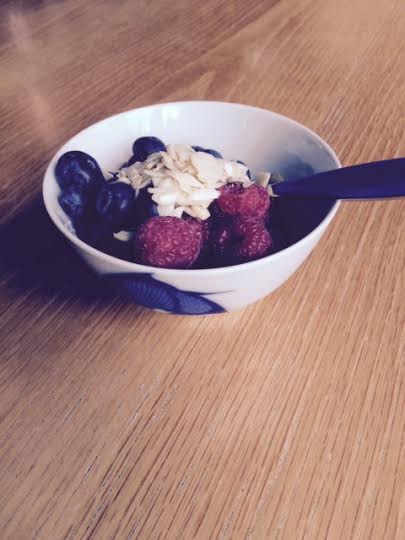
3.My go-to, quick and easy breakfast choice: Bircher Muesli or normal healthy cereal http://www.theguardian.com/lifeandstyle/wordofmouth/2014/oct/23/how-to-make-perfect-bircher-muesli-recipe with honey, berries and seeds or nuts on top. Use a dipping bowl or small teacup for this. I recommend using oats (in my case I am extremely lucky to be a coeliac who can tolerate gluten free oats) as they contain slow release energy. These pictures below show the layers of food I put in my dipping bowl which, by the way, is 4.25 inches across at the top. Almond-milk soaked oats + pomegranate seeds + raspberries + blueberries + topped with flaked almonds.

breakfast 1

breakfast 2

breakfast 3

breakfast 4

breakfast 5

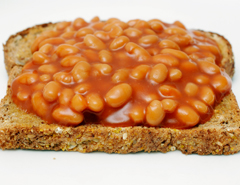
4. One slice of wholemeal toast with enough baked beans to cover. (Don’t overload)

62_beansontoast

5. Low fat Greek Yoghurt (which has twice as much protein as regular yoghurt) topped with berries, a few toasted almonds and some seeds.

greek yoghurt

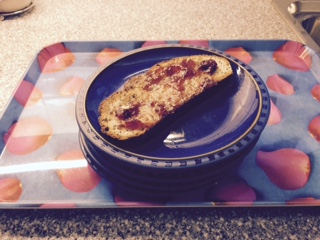
6. One slice of wholemeal toast with peanut butter or jam or honey on.

toast on side-plate

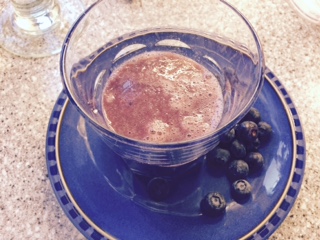
You can see in that photo that I have the plates out ready for the day ahead. I think I can see four. By the way, I very rarely drink juice or smoothies, but if you do want to, on the Side-Plate Diet, make sure it is in a small glass (see below). Even something as healthy as a freshly made fruit or vegetable juice smoothie needs to have portion control imposed on it.

smoothie pic

The thing to remember though is this: whatever you normally have for breakfast, as long as it isn’t a Mars Bar, or a bowl of Ben and Jerry’s, if you put it onto a side-plate or into a dipping bowl, you are most likely cutting down on your calorie intake. You will lose weight on this diet if you stick to this imposed portion control. However, nobody wants to feel faint or weak from lack of food, so you may need to adjust the number of side-plates you use. There are lots of variables: your metabolism, the amount of exercise you take and your age being the three most obvious. I definitely don’t need the amount of food I used to eat in my 30s and 40s. It has taken me a while to accept that, but there we are.

Also, don’t eat between the side-plate meals under any circumstances. Not so much as one grape!

This diet works!

Good luck and watch out for some lunch ideas coming soon.

green bee for signature copy

Annie Bee x

More pics of healthy breakfast ideas here: https://uk.pinterest.com/buzzanniebee/healthy-breakfasts/

The Joys Of Being A 50+ Woman

When my friends and I turned 40, there was a spate of lovely girlfriend birthday parties and one favoured present was a packet of Tena incontinence pads. How we roared. Not so funny now we have hit 50, is it ladies? Things have started to – I am trying to think of a nice word here – loosen and slacken, droop and fall. Externally and (more alarmingly) internally. Chin hairs sprout overnight; if you are lucky you can plait them, put a scrunchy on them which matches that day’s outfit and go about your business.

Many of the challenges faced by the over 50s woman are linked to the menopause and the accompanying dwindling amount of oestrogen in your body, but as we are all living longer, we do need to learn to love this post-menopausal life, wrinkles and all. The average age in the UK when menopause hits is 51 and sadly there is very little scientific evidence to support complimentary therapies if you decide, like me, that HRT is not an option. Exercise and relaxation (yoga, mindfulness) are recommended as being helpful though. British women can expect to live more than 30 years post-menopause, so we do need to understand it and get help if we need to.

200380495-001

Two Professors at The Institute of Psychiatry, King’s College London are currently doing research into the effects of the menopause on work performance. Like many women, I don’t work in the traditional office-based, 9 to 5 manner, but I certainly do have a huge amount of sympathy for those who are making critical business decisions, managing the P&L, and being responsible for other people’s careers, if they fall into the category of the 25% of women who have troublesome menopausal symptoms. Poor concentration, tiredness, poor memory and lowered confidence can all impact on your ability to perform in the workplace.

Interestingly attitudes to the menopause, and (surprisingly) symptoms, seem to vary around the world. If you want to read some in-depth info, this is a good source: http://www.menopausemgmt.com/cultural-differences-in-symptoms-and-attitudes-toward-menopause/

So what is the upside for us?

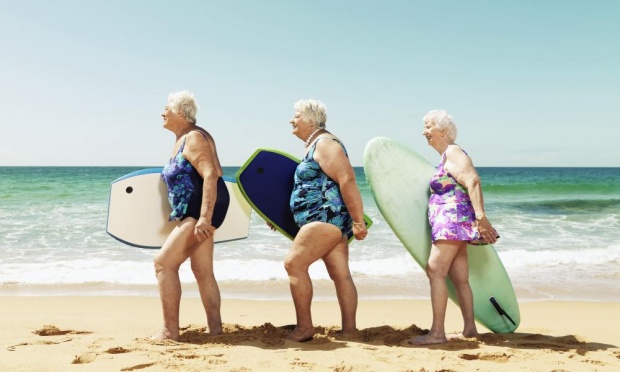
You can reinvent yourself in your 50s – you can wear what you like, be as quirky as you like, and you have probably settled into a very individual style of your own. You may not give a monkeys any more about what people think – you have opinions based on decades of wisdom and experience and you are probably not afraid to share them. Chances are your kids have just about flown the nest. Maybe it is time to take up pottery, change career path, start knitting, write a book, launch a new business, spend more time going to the theatre, take surfing lessons, train for a 5k run or learn how to upholster chairs. I hadn’t realised this, but you can join U3A (University of the Third Age) http://www.u3a.org.uk/ at any time you like.  Benefits galore.

elderly women going surfing in Oz

Thanks for reading and I’d love to hear from you.

green bee for signature copy

Annie Bee x

The Side-Plate Diet: Portion Distortion

In my first two blogs (see the February archive on the right of this post) I was talking in fairly general terms about portion sizes, plate sizes, obesity and the simplicity of my Side-Plate Diet.

In this piece, I want to discuss Portion Distortion. No matter how healthily you might be eating, if you eat too much and take in too much fuel and fail to burn it, you will put on weight.

Over ten years ago the UK charity, The World Cancer Research Fund (WCRF) http://www.wcrf-uk.org/ reported that over the previous 20 years food portions got ever bigger. Burgers were 112%  larger than in 1982, pasta servings 480% larger, and chocolate chip cookies 700% bigger. The UK Government has not updated their information on typical portion sizes consumed in the UK for over 20 years.

Dr Jeffrey Prince of the WCRIF said: “Between 1980 and  2003 portion sizes ballooned, and so did people. These two trends occurred simultaneously. Common sense tells you there must be a connection. Most weight loss success stories centre around reduced portion sizes. It’s a simple fact, if you eat less, you’ll lose excess weight”. Since then, things have probably got even worse regarding serving sizes, but the adage ‘eat less, lose weight’ remains true.

increase-in-portion-sizes

Packaging of our food plays an important role. The bigger the package, the more food you’ll pour out of it. When two groups of people were given 1/2 lb or 1 lb bags of M&Ms to eat while watching TV, those given the 1-pound bag ate nearly twice as much. The more you load onto your plate, the more you will eat. There are many studies to back this up (for more in-depth research take a look here: http://www.ifst.org/knowledge-centre/information-statements/psychology-food-intake-and-portion-control ). The NHS recommends, in their information on dieting, that we should be eating with smaller plates and bowls.

Previous Annie Bee  posts which cover this topic, in case you missed them, are here:

The Side-Plate Diet: The Background

When Is A Side-Plate Not A Side-Plate?

By only eating off side-plates like I do (for me, 3 a day means I am slowly losing the weight I need to without feeling weak and feeble – clearly the number of side plates will change depending on your gender, age, size etc and I am NOT advocating doing this diet if you do not need to lose weight in a sensible manner) this problem with portion distortion is largely solved for you. NB: I use 7 inch side-plates – make sure you get the size right. There are challenges around ensuring you still get enough fruit and veg, and keeping your food intake healthy and balanced but as long as you don’t snack (I literally now don’t so much as pick up an extra cherry tomato while walking past the fruit bowl) this diet works.

Other bits of diet advice which seem to be universal are: Eat slowly. Put your cutlery down between bites. Don’t eat in front of the TV.

Look out very soon for more in-depth information on the Side-Plate Diet  and let me know if you are giving it a go. I would love to receive some photos too.

vintage

There are some more pics you might like here https://uk.pinterest.com/buzzanniebee/portion-distortion/

green bee for signature copy

Annie Bee x

Hello. My Name Is Annie And I Am A Coeliac (or is that Celeriac?)

Several years ago I was chatting to the manager in my local large supermarket about the very emotional issue (if you are a coeliac) of gluten free bread, and he said, “Oh yes, I know it must be terribly hard for you celeriacs”. I didn’t have the heart to correct him as he looked so earnest, but have to say that as the years have gone by, the understanding of coeliac disease (hard enough to spell, let alone live with) and the offending protein, gluten, has improved hugely. Gluten free (gf) foods are now readily available here in the UK and many restaurants have menus which are fully labelled, taking the stress out of eating out. I was out for lunch recently here in Hertfordshire though and the waitress gleefully told me she would bring me the Allergy Information Pack which turned out to be a 100 paged, closely- typed scientific report which I then had to cross-reference against the menu. Jolly helpful you might think, but by the time I had found things I liked the sound of, checked whether the tick meant it was gf or contained gluten, and finally checked if it was on that day’s lunch menu, I had lost my appetite and was stressed by the whole palaver, as was Mr Bee. All coeliacs will know this problem well. Worse though is the waiter who says, “Yes I am sure that will be fine” but comes back 10 minutes later with the type of comment which makes a coeliac shudder: “the risotto contains rice, so you can’t have that”. If that is the level of their knowledge, cast aside your napkin and RUN.

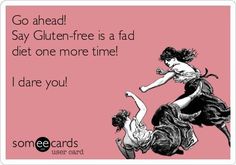
gf ee card

Some very lovely people I know eat a gluten free and/or wheat free diet for health reasons, even though they may not technically have this auto-immune disease (or at least have not been diagnosed). I vividly remember one waitress in a restaurant literally rolling her eyes when I told her I couldn’t have gluten (another picky eater) so I do sometimes feel like wearing a little badge which says ” REAL Coeliac” and I always, without fail now refer to it as “Coeliac Disease” when talking to people in a restaurant, cafe or shop. There does seem to be good evidence now of what is called ‘Non-Coeliac Gluten Sensitivity’ (NCGS) so we RCs (Real Coeliacs) need to embrace our brothers and sisters. The more the merrier.

There are so many lovely blogs, websites and books for coeliacs now. When you are at home, you can eat like a king. Travelling abroad has its challenges but you can print off information about the disease in loads of languages these days which at least cuts down on the chances of mistakes being made.

It is no picnic being coeliac, but there are MUCH worse problems to have.

If you want a good, in-depth article on these matters, try this:  http://www.theguardian.com/lifeandstyle/2015/feb/25/gluten-free-diet-life-saving-fad

Thanks for reading. There are a few more pics here: 

green bee for signature copy

Annie Bee x